




- Your cart is empty Browse Shop
The Role of the Cultivator in Conservation Agriculture
In the modern agricultural landscape, the conversation is no longer just about yields; it is about sustainability. As the global population grows, farmers face the pressing challenge of producing more food with fewer resources while protecting the environment for future generations. At the heart of this movement is Conservation Agriculture (CA) .
At Krittvo International, we proudly operate under the brand name Krittvo—a name that represents strength, precision, and trust in global agricultural exports. We understand that the tools farmers use are not just machinery; they are instruments of stewardship. While Conservation Agriculture often emphasizes minimal soil disturbance, the cultivator remains a critical player in this ecosystem. Let’s explore how modern cultivators are adapting to fit the principles of conservation and how Krittvo is leading that charge.
Understanding Conservation Agriculture
Before diving into the machinery, it is essential to understand the three core principles of Conservation Agriculture as defined by the Food and Agriculture Organization (FAO):
Minimum Mechanical Soil Disturbance: Limiting tillage to only what is necessary.
Permanent Soil Cover (Mulch): Keeping crop residues on the surface to protect the soil.
Crop Diversification: Rotating crops to improve soil biodiversity.
For decades, the traditional cultivator was seen as a tool for “intensive” tillage. However, in the hands of a knowledgeable farmer, and with precision equipment from Krittvo, the cultivator becomes a tool for regenerative farming.
The Cultivator’s Evolving Role: From Disruption to Preservation
The classic image of a cultivator tearing through the soil is outdated. In Conservation Agriculture, the cultivator serves three specific, sustainable purposes:
1. Strategic Soil Loosening (Controlled Traffic)
One of the biggest enemies of soil health is compaction caused by heavy machinery. Even in no-till systems, compacted layers can form.
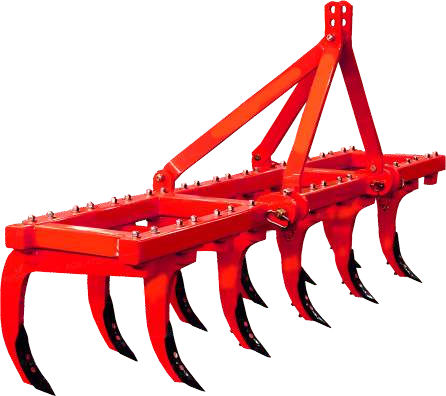
The Krittvo Solution: Our heavy-duty cultivators are designed with precision-engineered tines that can break up hardpans without inverting the soil layers. By creating a pathway for roots and water, we restore the soil’s natural structure while preserving the organic matter on the surface.
2. Effective Residue Management
Conservation Agriculture requires that at least 30% of the previous crop’s residue remain on the soil surface. However, too much residue can clog planting equipment.
The Krittvo Difference: Our cultivators feature advanced shank designs and optimal tine spacing that allows them to slice through heavy crop residues (like maize or wheat stubble) without “hair-pinning” the trash into the seed slot. This ensures the soil stays covered while preparing a perfect seedbed for the next crop.
3. Inter-Row Weed Management (Mechanical Weeding)
Herbicides are often overused in simplified CA systems. However, for organic farmers or those looking to reduce chemical input, mechanical weeding is vital.
Precision in Action: Krittvo cultivators, equipped with precise adjustment settings, allow farmers to run between rows of growing crops. This uproots weeds without disturbing the crop roots, returning them to the surface to dry out and become organic mulch. This aligns perfectly with the “soil cover” principle.